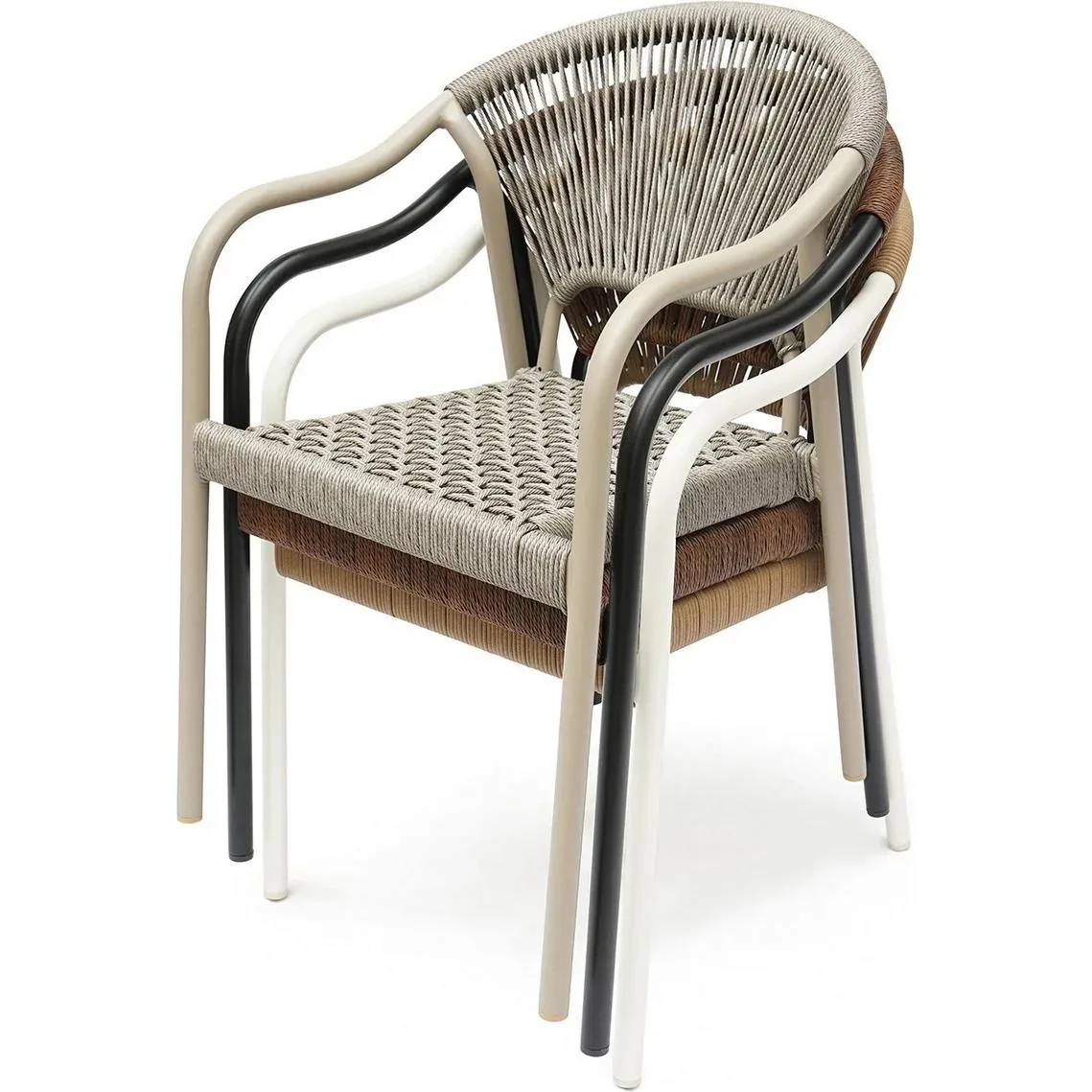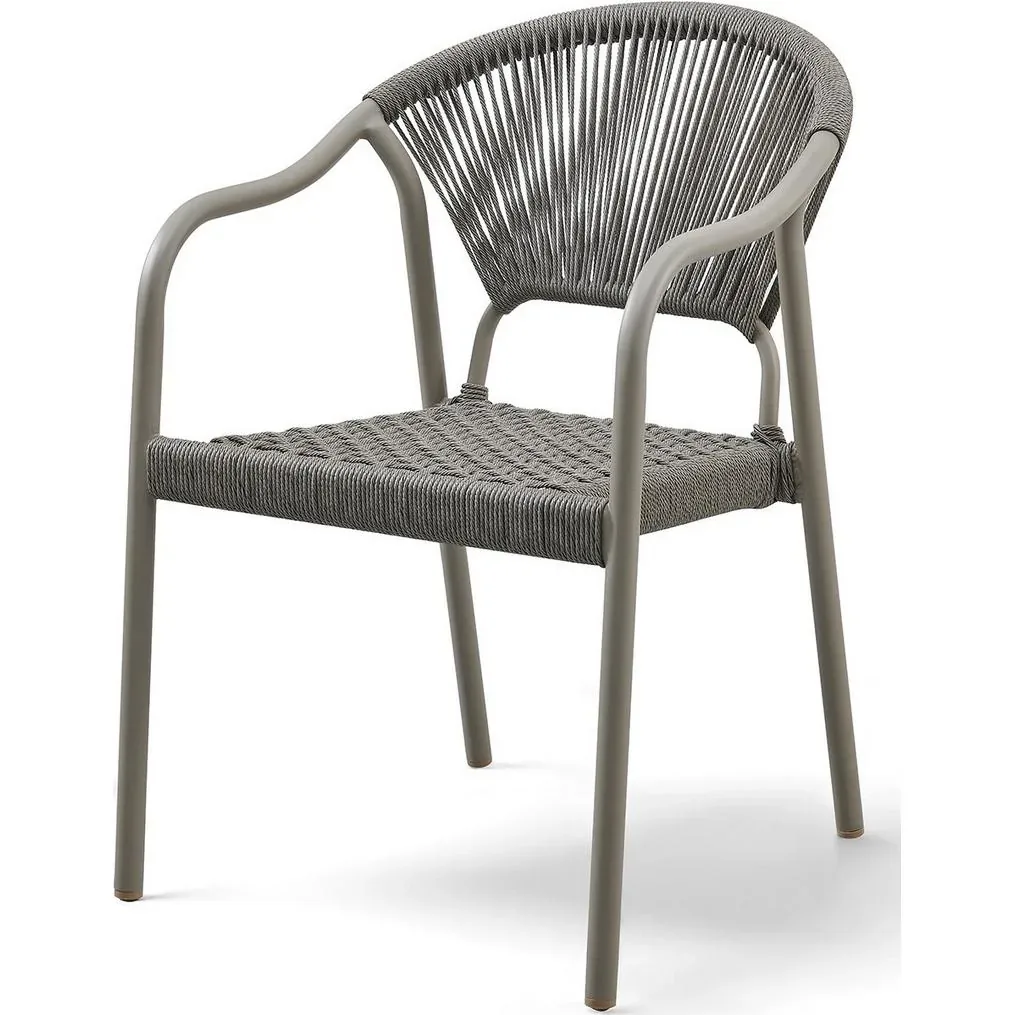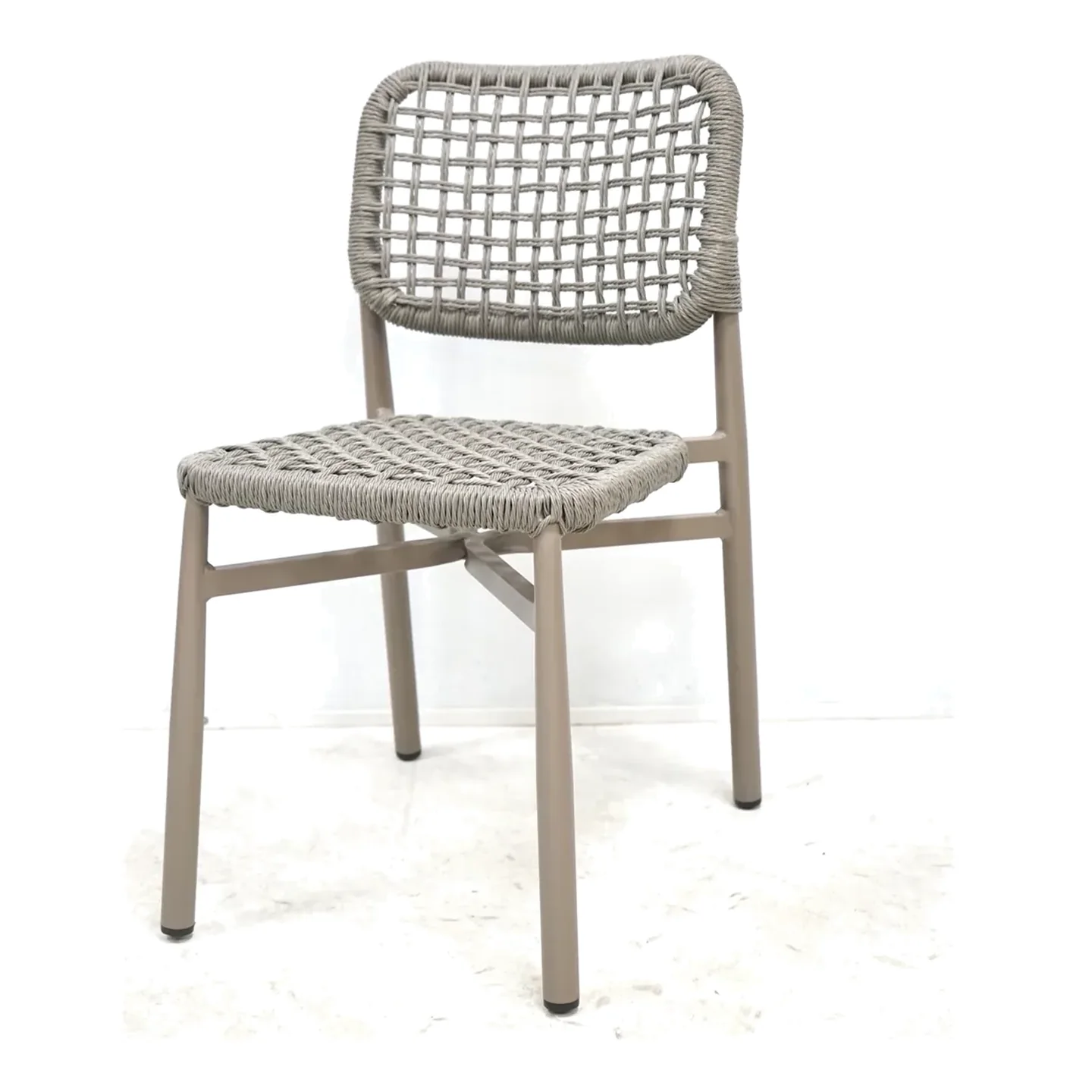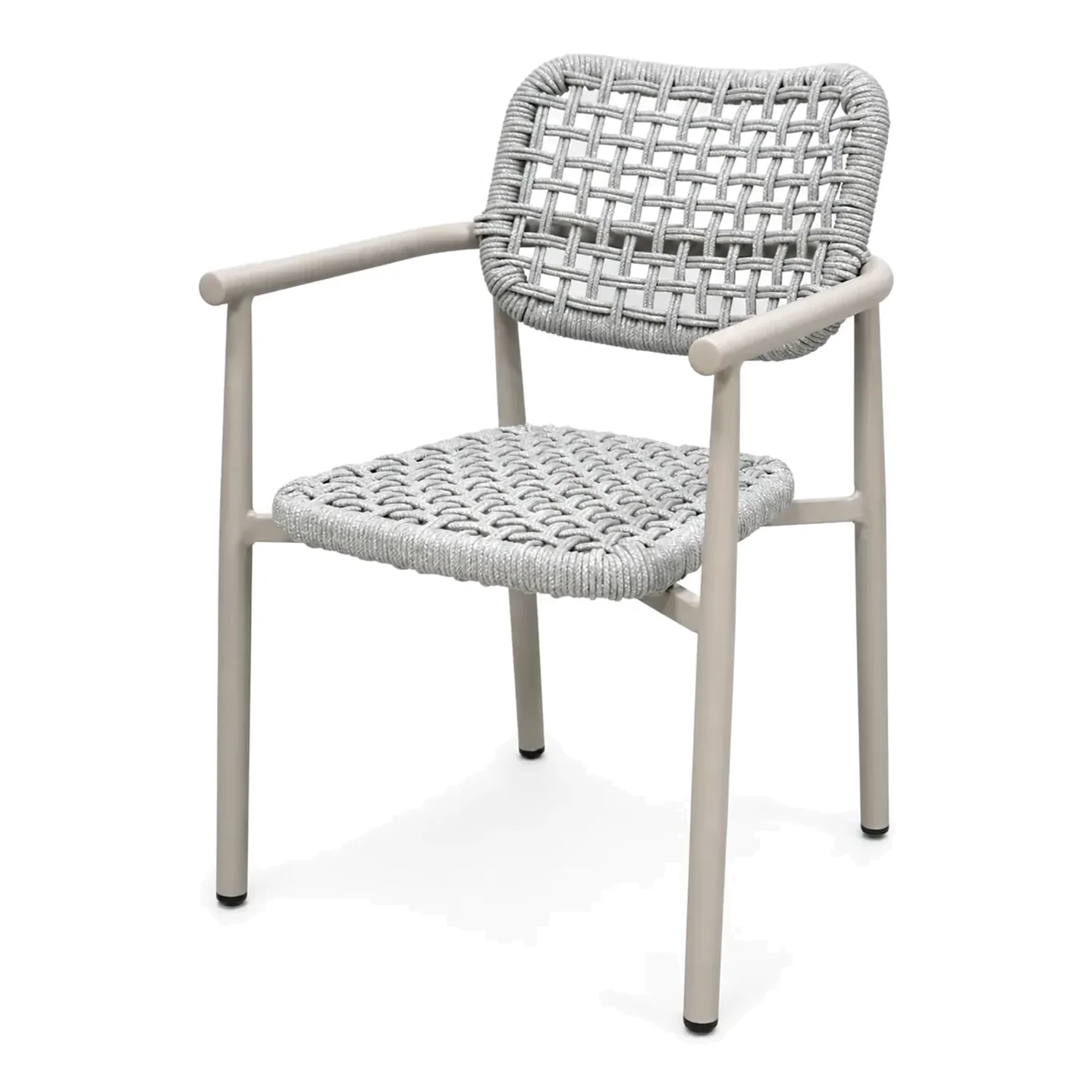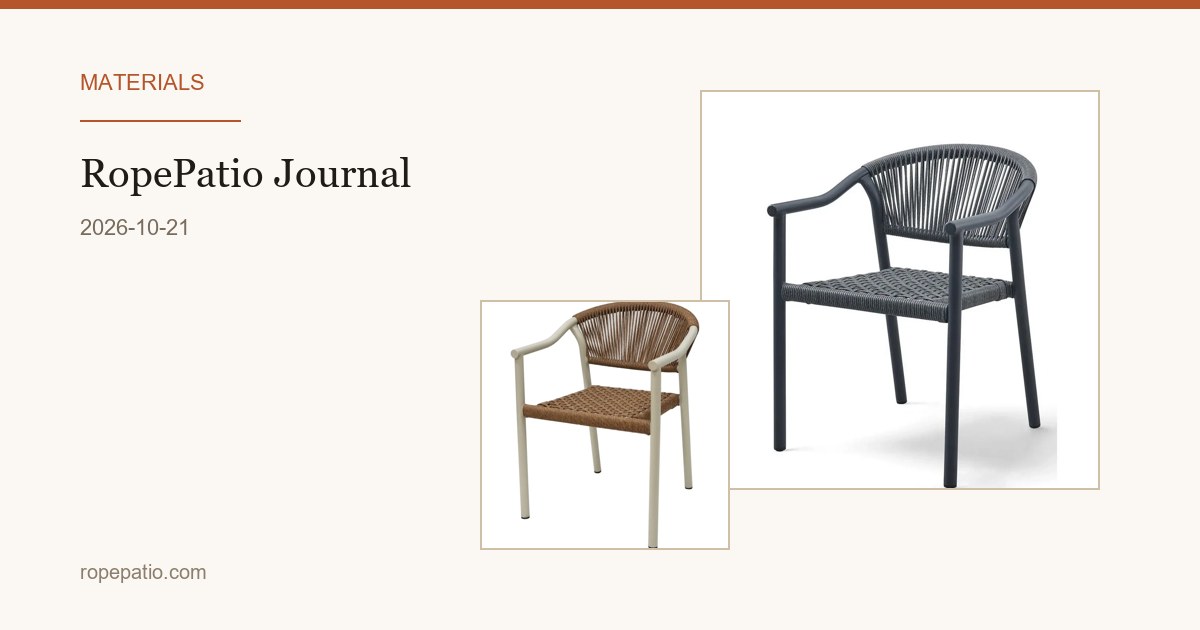
Nearly every woven outdoor chair on the market is made from one of two fibres. The difference between them is real, but it is narrower than most catalogues suggest — and it matters less than how the rope is tensioned and how the frame is built.
What olefin is good at
Olefin is a polypropylene fibre. It absorbs almost no water, which means it dries faster than any other rope used outdoors and does not swell when it rains. In humid, coastal or monsoon climates that is the deciding advantage: a chair that dries in an hour is a chair that never grows mildew.
It is also slightly softer in the hand and takes deep colour well, which is why dark and saturated tones — olive, terracotta, navy — tend to look richer in olefin.
What polyester is good at
Polyester has higher tensile strength and much less stretch under load. On a bar stool, where the weave carries a person's full weight plus the leverage of a footrest, that difference is visible over years rather than months: the seat keeps its shape instead of slowly bowing.
It is also more resistant to abrasion, so it suits high-traffic commercial seating where the rope rubs against tables and walls all day.
The honest comparison
| Property | Olefin | Polyester |
|---|---|---|
| Water absorption | Very low, dries fastest | Low, dries slightly slower |
| Tensile strength | Good | Higher |
| Stretch under load | More | Less |
| Abrasion resistance | Moderate | Better |
| Hand feel | Softer | Firmer, more structured |
| Best for | Humid climates, lounge seating | Bar stools, high-traffic dining |
How to choose in practice
Start with climate, then seat type. Coastal Florida, the Gulf and South-East Asia tilt towards olefin because drying speed matters more than tensile strength. Northern Europe and desert climates can lean on polyester for the extra structure. For a venue, the split is usually by height: olefin on lounges and dining chairs, polyester on bar stools.
If a project mixes both, keep the colour identical. The two fibres take dye slightly differently, and a mismatched pair reads as a manufacturing error rather than a material choice.
What matters more than the fibre
Three things, in order: weave tension, anchor construction, and frame rigidity.
- Tension — under-tensioned rope sags within a season regardless of fibre. Ask for a sample and press the seat; it should give slightly and spring back without a dent.
- Anchors — rope should terminate inside the frame, heat-sealed and tucked. Glue and staples are the first things to fail.
- Frame — a flexing frame transfers movement into the weave. Welded aluminium or solid teak; resin will flex.
A good olefin chair on a solid frame will outlast a premium polyester chair on a weak one, every time.
Questions worth asking a supplier
Which fibre is this model, and can it be specified in the other? Is the rope solution-dyed or surface-dyed? What is the weave tension measured against, and can I see the reference sample? Those three answers tell you more about longevity than any claim on a spec sheet.