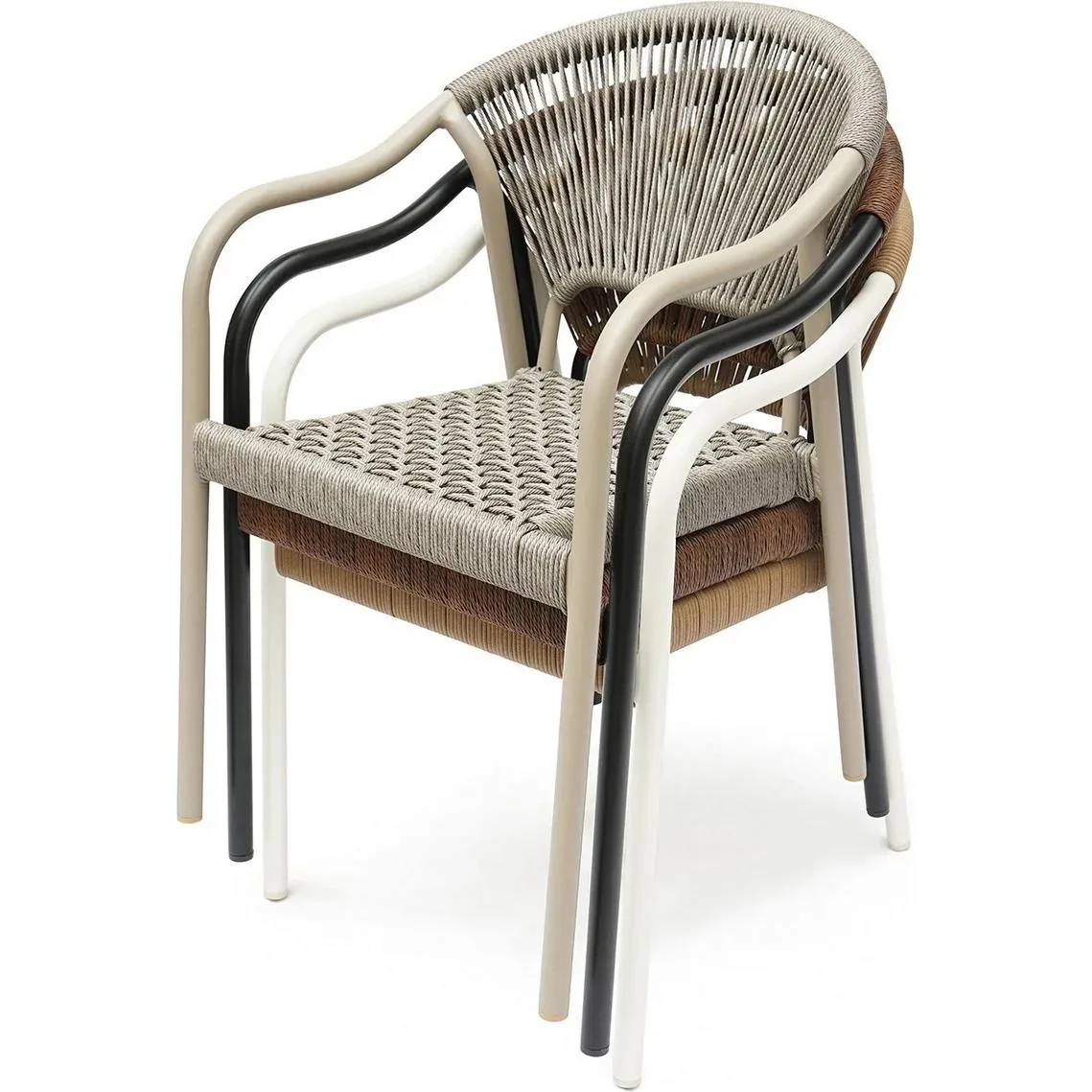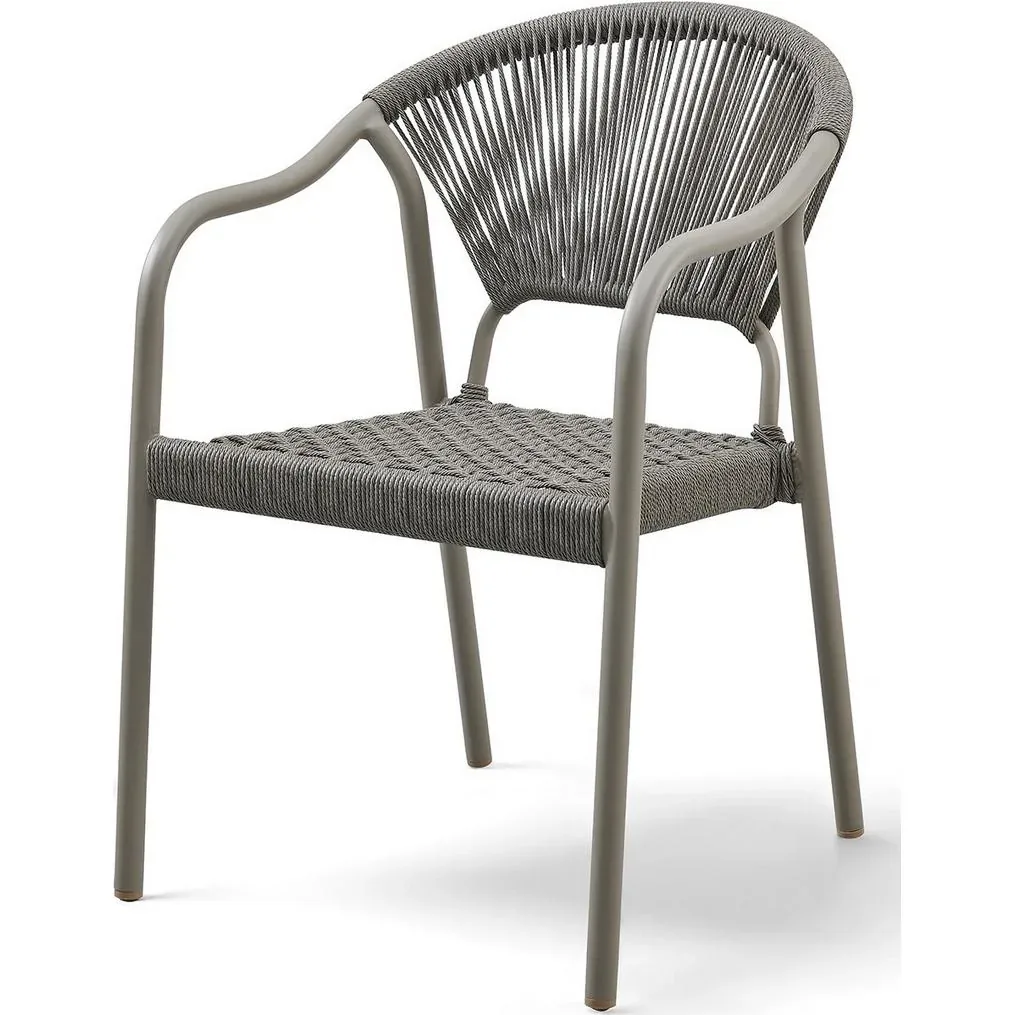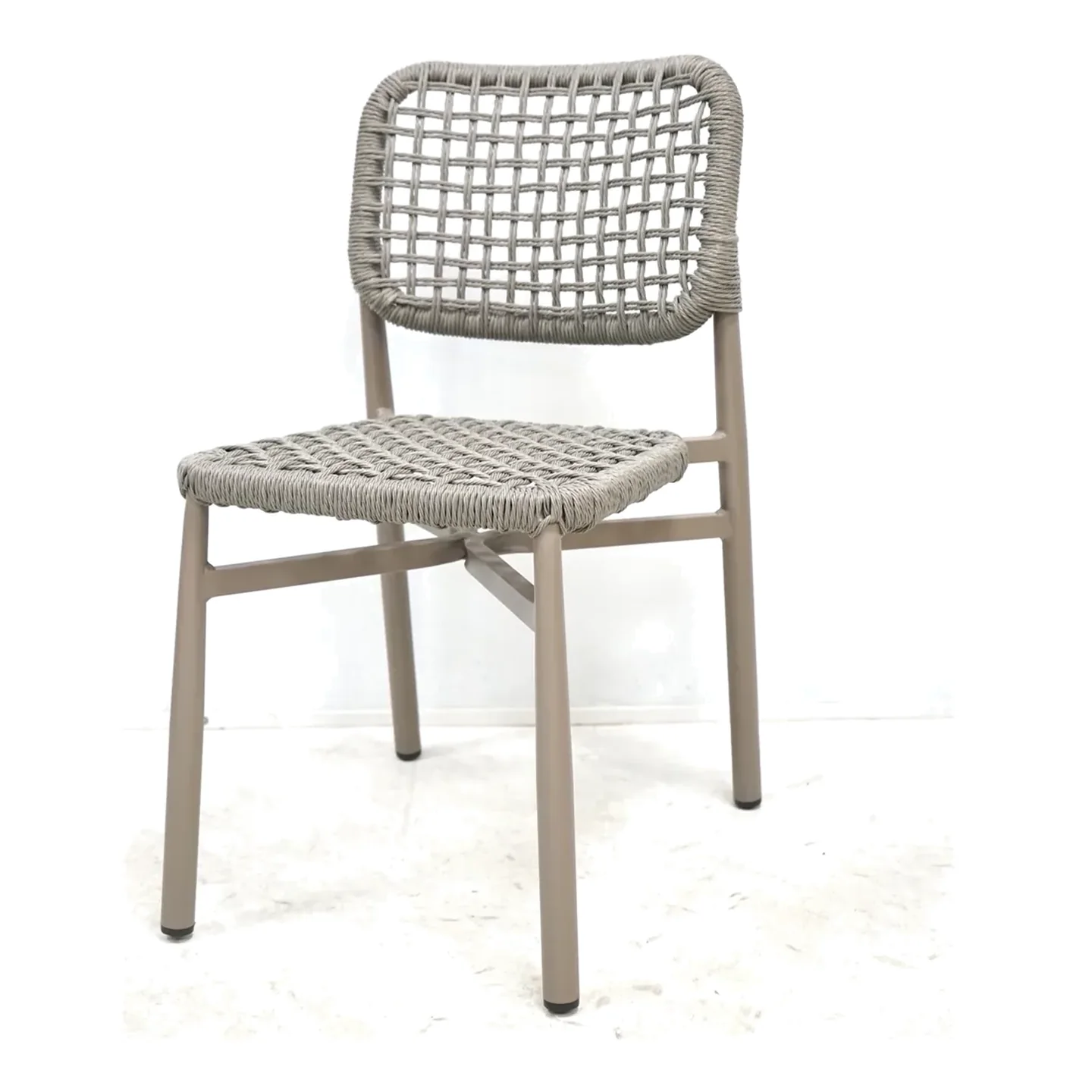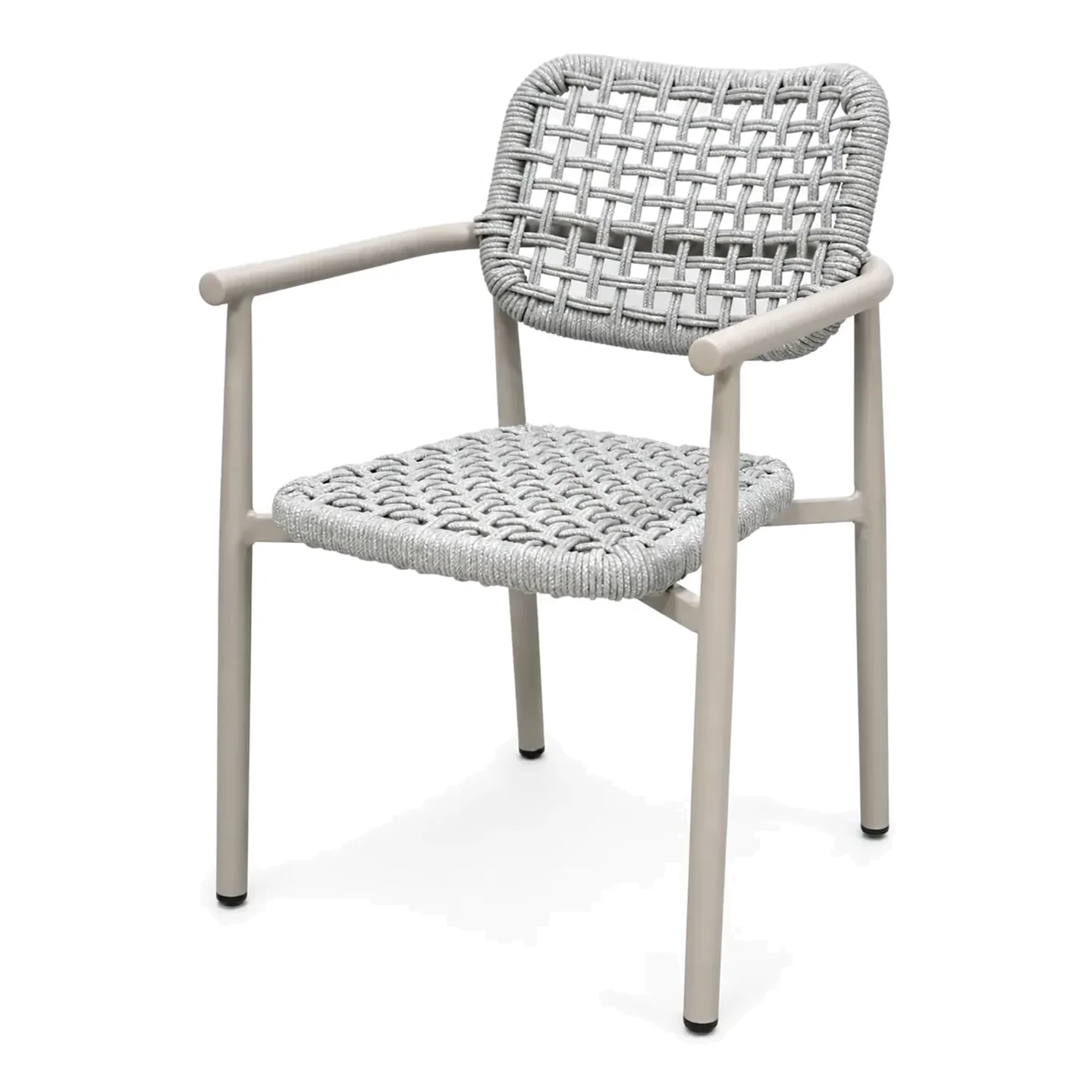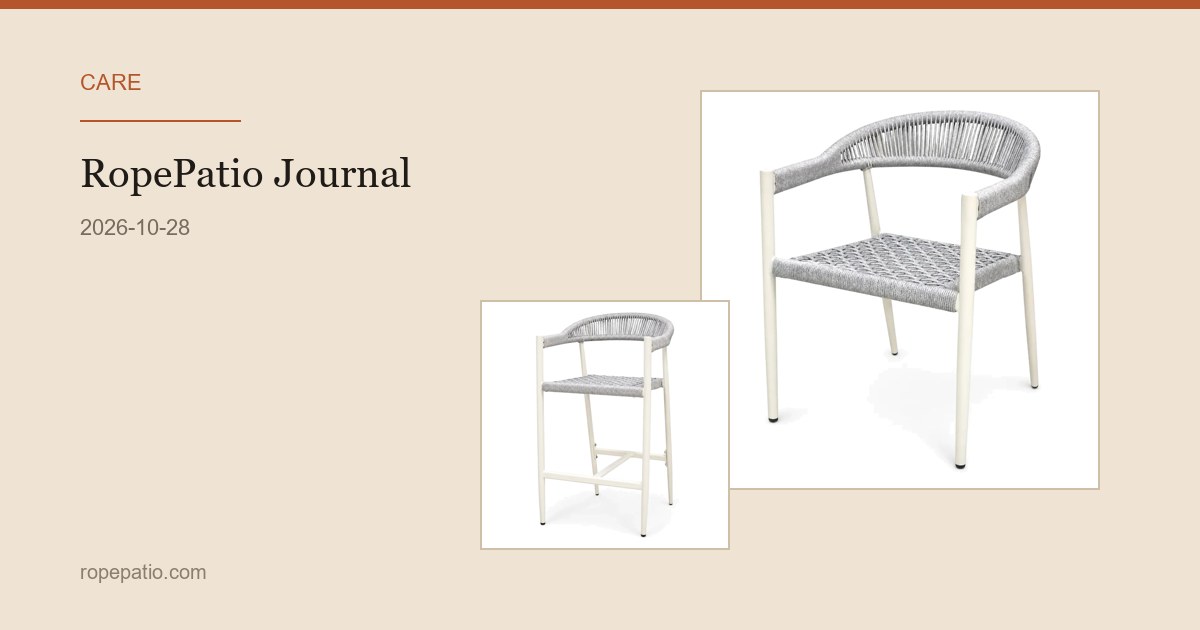
Rope outdoor furniture is easy to clean, which is exactly why it gets cleaned badly. The two most common mistakes are the same two that ruin most outdoor seating: a pressure washer and a strong chemical. Both strip the surface that protects the fibre, and neither is necessary.
The weekly routine
Dust and pollen settle into the top rail and the gap between the seat weave and the frame. Left there, they hold moisture against the rope. A soft brush and a rinse is enough, and it takes about two minutes per chair.
- Brush downwards along the weave with a soft hand brush or a vacuum on a soft attachment.
- Wipe with warm water and a few drops of mild washing-up liquid.
- Rinse with clean water — a watering can is better than a hose because it is gentler and more targeted.
- Stand the chair on its side for ten minutes to drain, then leave it upright to air dry.
Do that once a week in season and the chair never needs a deep clean.
What to do about stains
Treat stains the same day, and blot rather than scrub. Scrubbing works dirt into the gap between strands, where it is much harder to lift out.
- Wine and coffee — blot, then a diluted solution of mild detergent, then rinse. Do not use bleach; it dulls the colour permanently.
- Bird droppings — warm water first, soften, then wipe away. Do not pick at it dry, which can catch a strand.
- Sun cream and oil — a small amount of washing-up liquid directly on the spot, worked in with fingertips, then rinsed thoroughly.
- Mould or mildew — a diluted white vinegar solution (one part vinegar to four parts water), then a full rinse and a day in the sun.
Why not a pressure washer
A pressure washer at close range forces water past the rope's outer surface and into the core, and it can fray the strand ends where they are anchored. It also strips the powder coat at the joints, which is where rust starts. If you must use one, keep it at the widest nozzle, a metre away, and never aim at an anchor point.
The frame is the part that actually fails
Rope is forgiving. Powder-coated aluminium less so. Two things shorten a frame's life: standing water in the feet, and cleaning products left on the surface. Rinse properly, and tip the chair after rain so water does not sit in the leg.
If a chair looks tired after two seasons, the cause is almost always a coating failure at a joint, not the rope.
Cushions
Quick-dry foam cushions should be stood on edge at the end of service, not left flat on the seat. Covers unzip and wash cool; refit them slightly damp so they shrink back to shape as they dry. Never put a foam cushion in a tumble dryer.
Storage and winter
Rope and aluminium can stay outside all year in most climates. In freezing conditions, bring cushions indoors and check the weave tension in spring. Frost does not damage synthetic rope, but water trapped in the frame and a cracked coating will, and that shows up as a loose weave the following season.
The short version
Brush weekly, wash monthly, rinse always, never pressure-wash, and treat stains the day they happen. A rope chair looked after this way will outlast the upholstery on the sofa indoors — and it will still be the easiest thing on the terrace to clean.